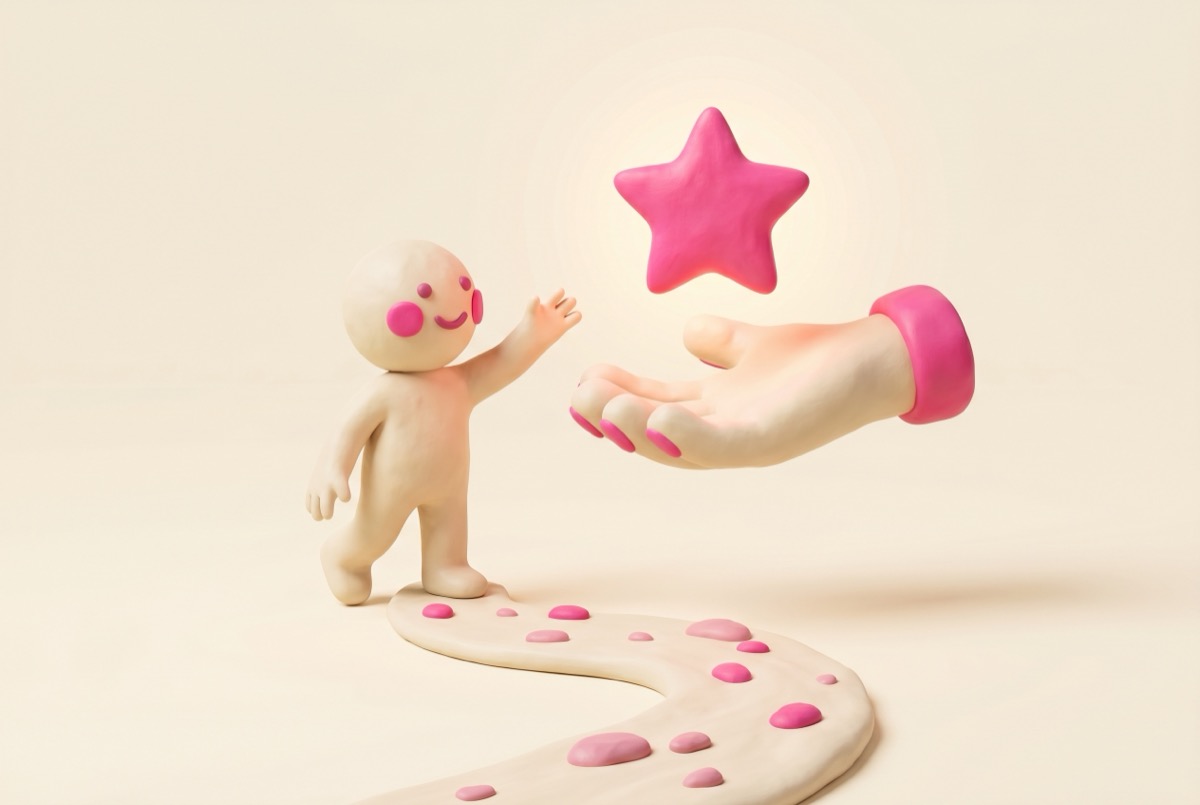
Neuroscience, simply
How to rewire your brain for confidence

Elena HartMindset writer at Plasti AI
Neuroscience, simply
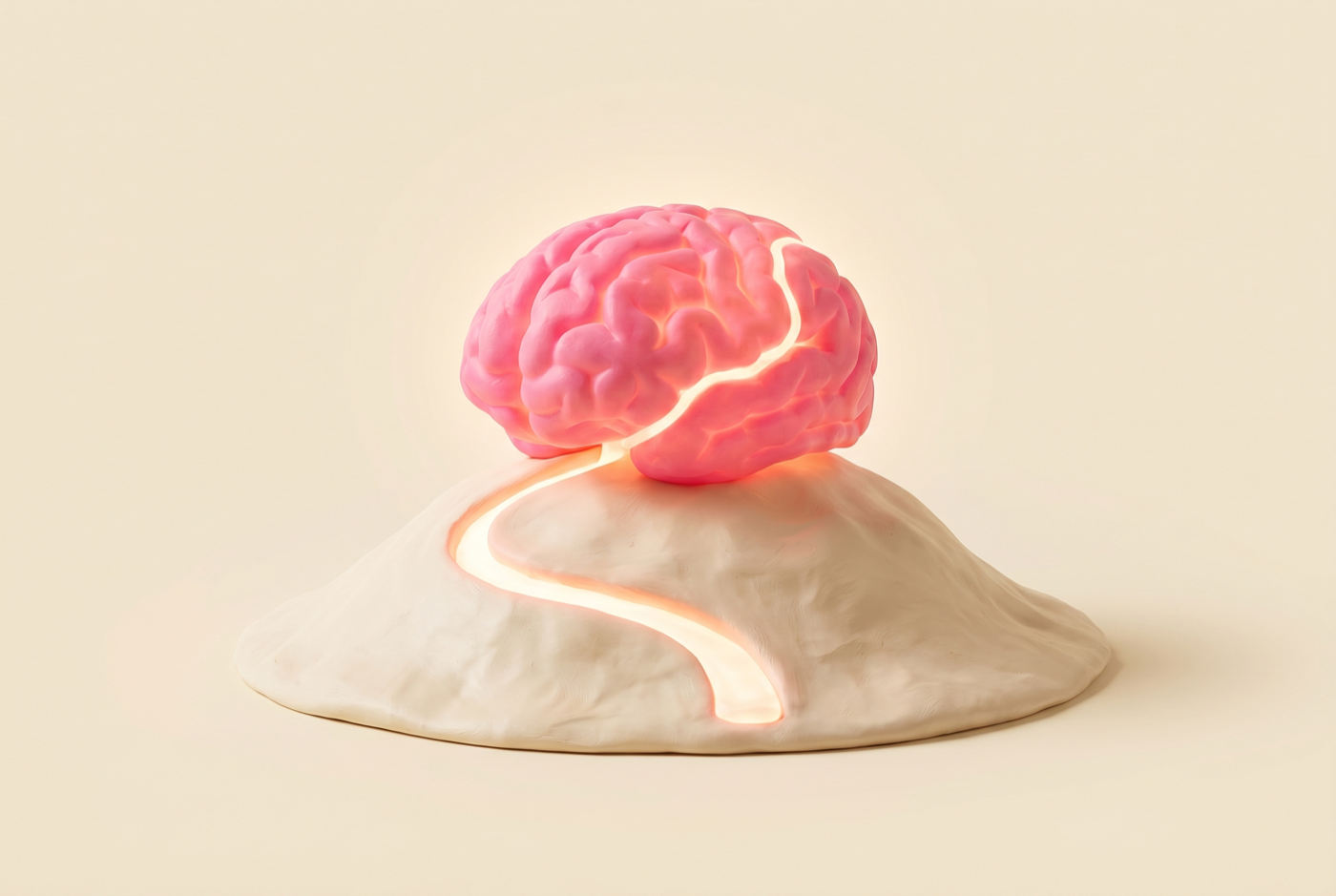
We talk about confidence like it's a thing some people have and others don't. It isn't. Confidence is a path your mind has walked so many times that it's become the default route.
Think of your brain like a forest. Every thought is a trail. The trails you walk again and again turn into wide, easy paths. The ones you ignore grow over. Right now, your self-doubt might be a six-lane highway, and your confidence a thin track you can barely find. That's not a character flaw. It's just traffic.
Telling yourself to "just be confident" is like deciding to take the overgrown trail once. It feels good for an afternoon, then the highway pulls you back. The default wins because it's worn in. To change which path is the default, you have to walk the new one, often, and with feeling.
This is the part most advice skips. The brain reshapes itself around what you repeat. The science word is neuroplasticity, but you don't need the word. You need the reps.
Two things make a new path widen faster: vividness and repetition.
Vividness. Your brain doesn't draw a hard line between something you vividly imagine and something you actually lived. When you picture your confident self in detail (the room, the conversation, how your shoulders feel), your brain logs it as practice. So you're not daydreaming. You're rehearsing.
Repetition. One vivid rehearsal is a footstep. The path widens when you come back tomorrow, and the day after. This is why a confident affirmation you hear every morning does more than a pep talk you give yourself once a year.
You're not lying to yourself. You're choosing which story gets the highway.
That's the whole method. Pick the path you want to be the default, then walk it daily until your brain stops asking for directions.
Plasti AI is built around exactly this: personalized affirmations and visualizations, and tapes you can loop, so the reps happen without you having to remember them. New to the practice? Start with how to manifest something.